The scent of the Japanese soul
Antique silk kimono, chosen one by one in Japan. Worn differently.
See the collectionThis is not fast fashion. This is not simply a dress. It is an encounter.
An antique kimono, carrying the stories and the gestures of Japanese artisans, given a second life in Paris between your hands and your skin. It is bought one at a time in Japan — we will not have another. Silent but alive, because it is you who gives it breath again.
Upcycling becomes art — when it meets your silhouette, your scent, your way of being.
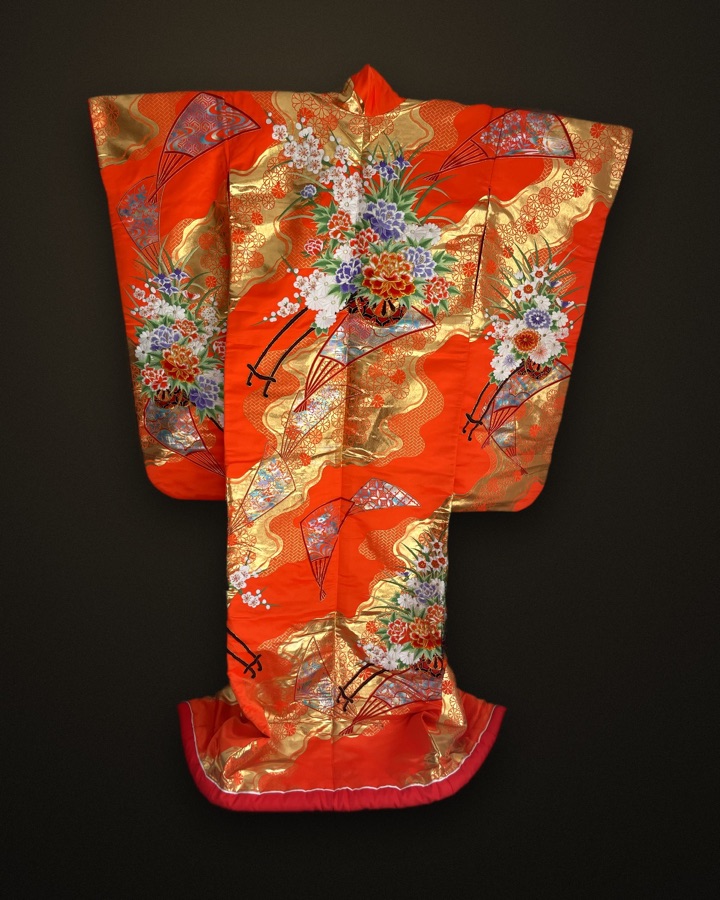
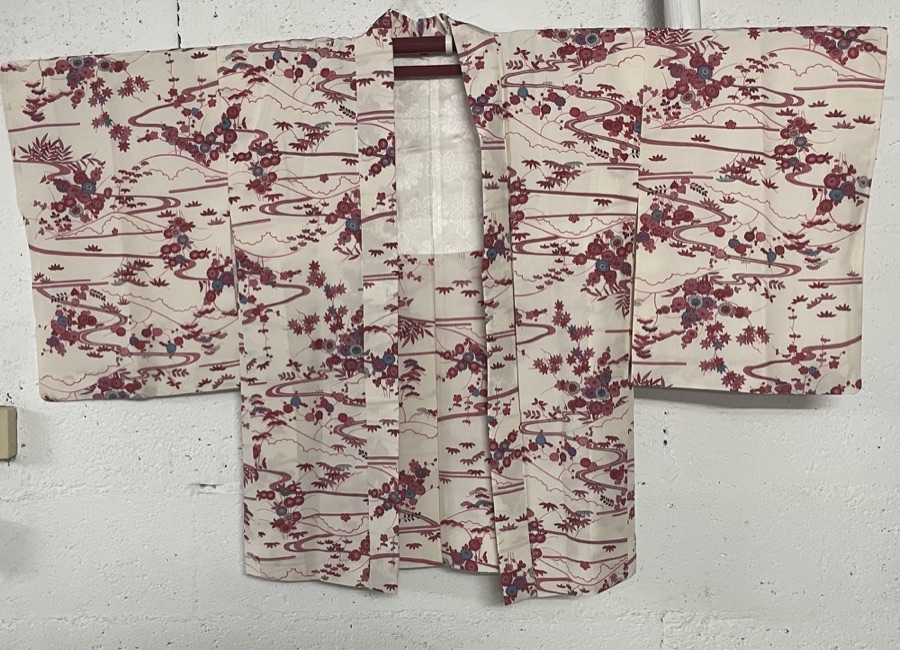
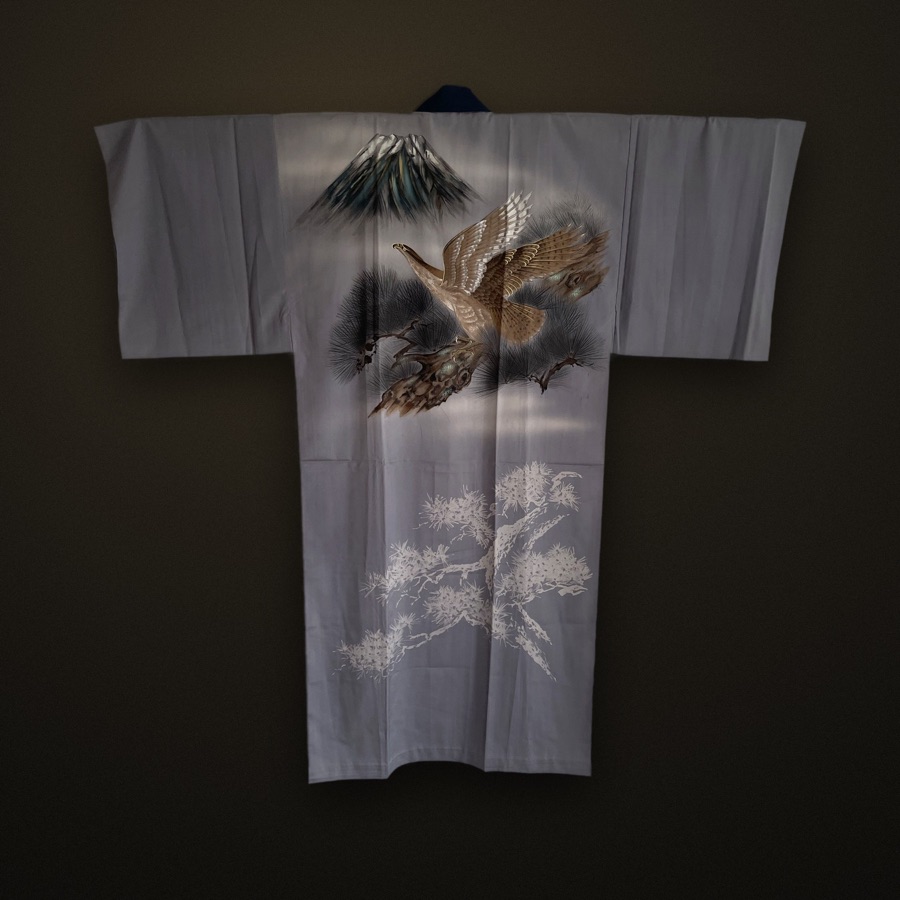
A selection
Worn open, like a long robe
In France these pieces are not worn as they are in Japan. They are left open, over jeans, a shirt, a black dress. They become a light coat, a cardigan, a long jacket.
There is no obi to tie and no rule to learn. On someone around 165 cm, a woman’s kimono falls to mid-calf, and the sleeve stops three quarters down the arm. That is exactly how it should be worn.
Every piece is photographed as it is, measured to the centimetre, and its flaws are shown rather than hidden. There is only ever one of each.
Behind KAHORI
KAHORI comes from two words. Kaho (香), my given name: light, harmony, gentleness. Ori (織): weaving, cloth, the passing on of a craft. Together, kahori means scent — the beauty of what cannot be seen.
I am Japanese, born in Osaka, living in France. I trained first as a nurse in cardiac surgery and stroke care, then as a qualified teacher of Japanese, and I am today the European representative of a Japanese organisation devoted to reihō, the Japanese art of gesture and protocol.
One word ties all of it together: to set right. The body, the habits, the gesture, the bearing. A kimono belongs to that — you hold yourself differently when you wear one.
The pieces I offer come from Japan, chosen one by one, checked, and shipped from France.